Belgravia, Mayfair and Knightsbridge sit side by side around Hyde Park and are often spoken of as one market. They were built in different centuries, by different people, and they feel different to live in. For tenants choosing between them and landlords letting there, those differences matter more than the shared postcode prestige.
Mayfair: a Georgian grid from the 1720s
The Grosvenor family's London land came through the marriage of Sir Thomas Grosvenor to the heiress Mary Davies in 1677. In 1720 the family decided to develop the hundred acres it owned in Mayfair, and by 1725 the new streets had been named. Building went on for more than half a century, with the last leases on the estate granted in 1777. The wide, straight grid around Grosvenor Square still largely survives.
The name comes from the May Fair, which by around 1701 was being held in the streets around what is now Shepherd Market. It had ceased by the 1720s, when the houses arrived. Today Mayfair mixes offices, galleries, hotels and restaurants with flats and some very large houses, so it is busier than its neighbours and its homes are more often apartments above street level.
Belgravia: Regency stucco from the 1820s
A century later Robert Grosvenor, later the first Marquess of Westminster, developed his family's land to the south west of Mayfair. Thomas Cundy, surveyor to the estate from 1821, had a plan ready by 1825, and the master builder Thomas Cubitt was the main developer, raising the marshy ground with earth dug out for St Katharine Docks. Belgrave Square, begun in 1825, was largely the work of the architect George Basevi, and most of the houses around it are listed at Grade I.
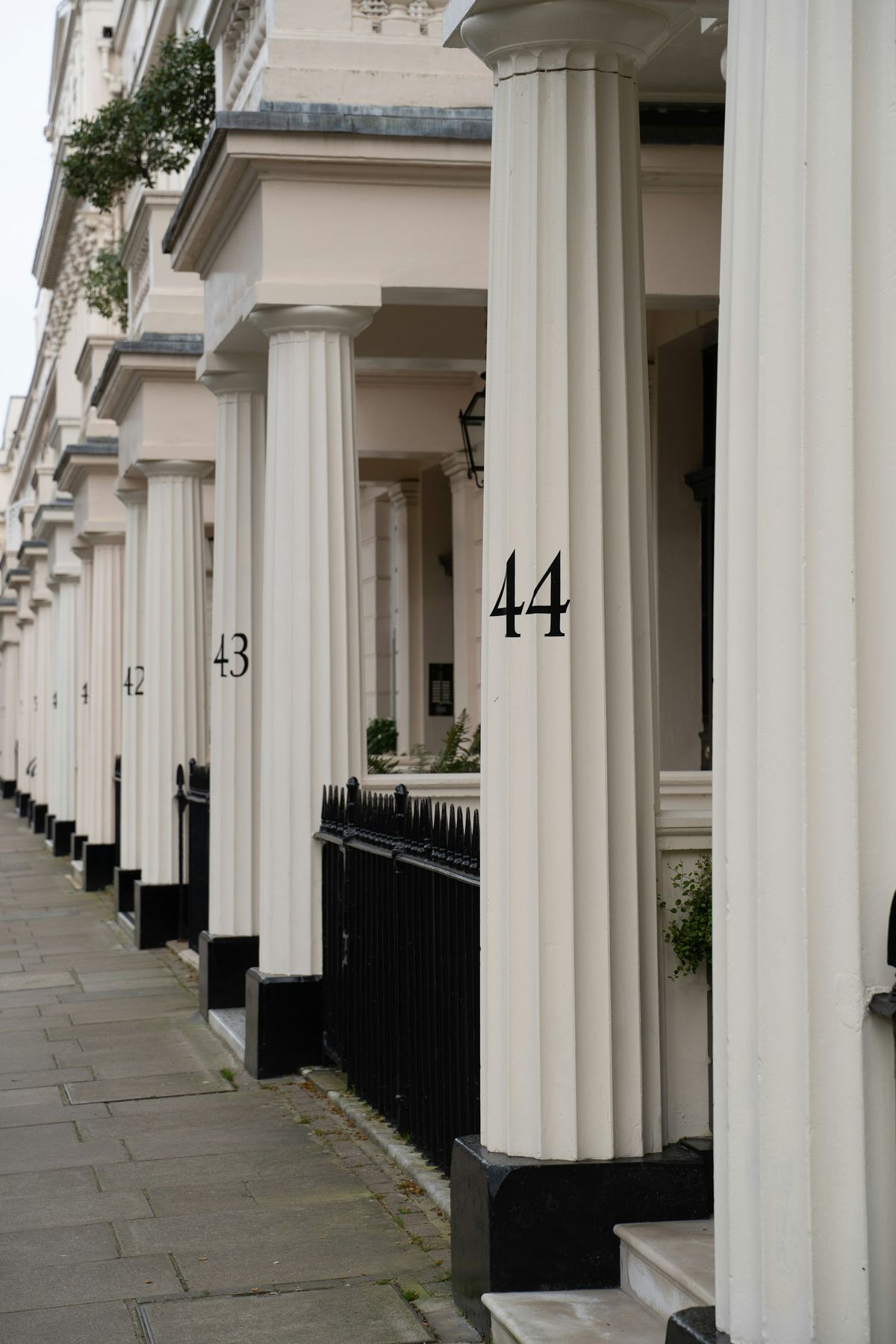
The result is the most uniform of the three: long cream stucco terraces, columned porches and private garden squares. Belgravia is quieter than Mayfair, with embassies and residences on many of its larger streets, and a good deal of its housing is now flats within the old houses.
Knightsbridge: Hans Town and Pont Street Dutch
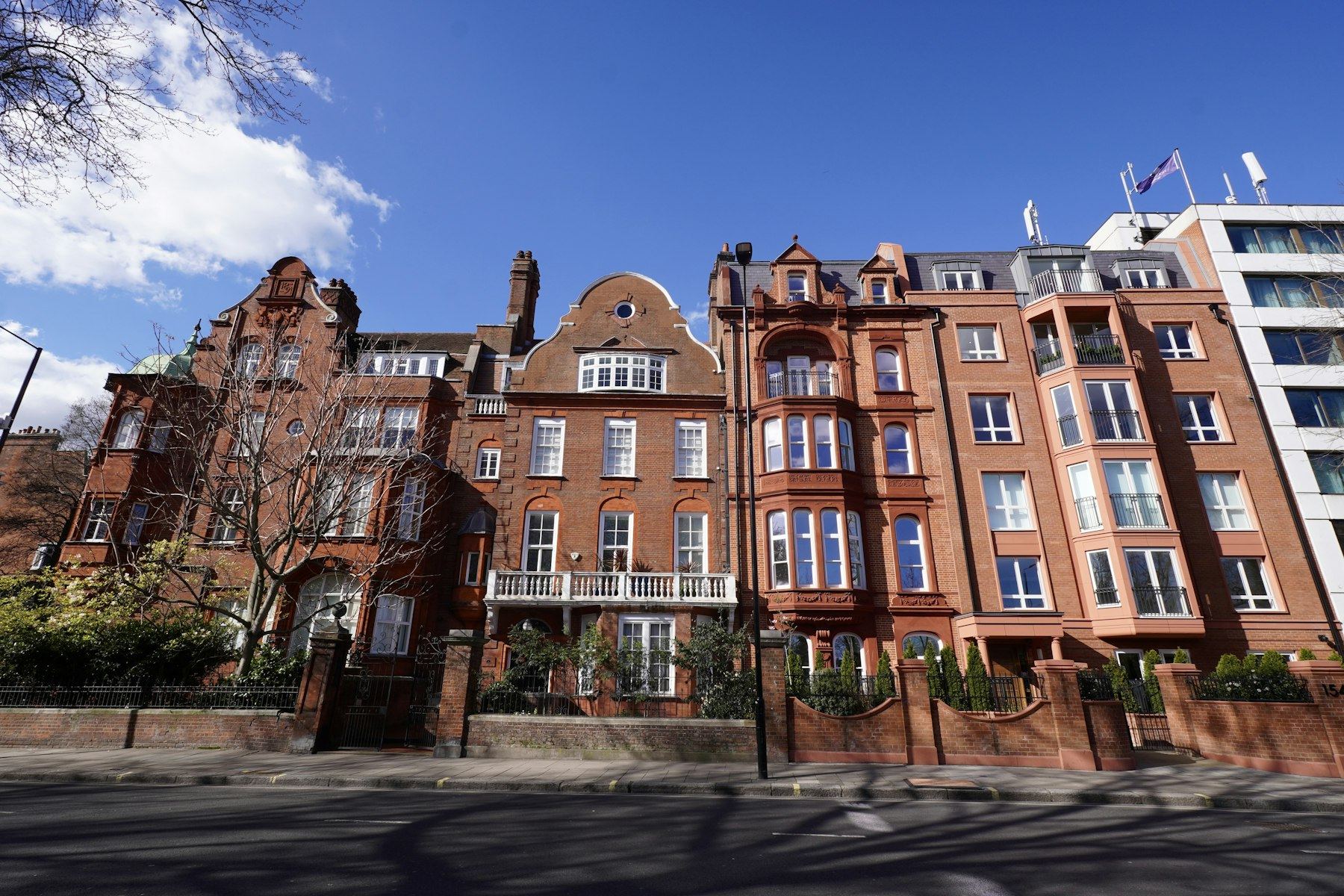
Knightsbridge straddles the boundary between Westminster and Kensington and Chelsea. Much of its southern side grew from Hans Town, which the architect Henry Holland began in earnest in 1777 on land leased from Lord Cadogan and named after Sir Hans Sloane. Holland laid out Sloane Street, Cadogan Place and Hans Place. From the 1870s to the 1890s many of his Georgian terraces were replaced with the tall red brick houses of Cadogan Square and Pont Street, a style Osbert Lancaster later called Pont Street Dutch.
It is the most retail focused of the three, with Sloane Street and Brompton Road on the doorstep, and Hyde Park, which Charles I opened to the public in 1637, to the north.
What the official figures say
The Office for National Statistics does not publish rents for individual neighbourhoods, only for local authorities. In August 2026 the average private rent was £3,196 a month in Westminster, which covers Mayfair and Belgravia, up 0.6% on a year earlier. In Kensington and Chelsea it was £3,690, up 2.1%. These are borough averages across every type of home, so a lateral flat on a garden square will be a very different proposition, which is why we never rely on an automated figure.
What landlords should know
- Licensing. Westminster's selective licensing scheme began on 24 November 2025 and its designation includes the Knightsbridge and Belgravia ward. Kensington and Chelsea runs additional licensing for houses in multiple occupation across the whole borough until 31 May 2028. Check your exact address with the council before you let.
- Leases. Much of this part of London is owned by long established estates and many homes are held on leases. Read yours for any consent you need before subletting, and for rules on alterations.
- Listed buildings. Works that affect a listed building's character need listed building consent, which matters in streets where whole terraces are listed.
- The Renters' Rights Act. Since 1 May 2026 new tenancies are periodic and the rent can rise only once a year, using the section 13 process, at every price point.
Our property management service handles tenants, repairs and compliance day to day, and guaranteed rent pays you an agreed sum every month instead. For a figure for your own home, use our rent calculator and a property manager will come back to you, or read more on our London page. If you are looking to rent here, you can register your search with us.
Sources: Grosvenor, Our history; Survey of London, The Development of the Estate 1720 to 1785: Introduction (British History Online); Survey of London, The Development of the Estate 1720 to 1785: The Course of Development (British History Online); Old and New London, The May Fair (British History Online); Historic England, The Grosvenor Estate: Belgrave Square (list entry 1000792); Royal Borough of Kensington and Chelsea, Hans Town Conservation Area Proposals Statement; The Royal Parks, History of Hyde Park; ONS, Housing prices in Westminster; ONS, Housing prices in Kensington and Chelsea; Westminster City Council, Designation of an area for selective licensing; Westminster City Council, Selective licensing FAQs; Royal Borough of Kensington and Chelsea, Designation of an area for additional licensing of HMOs; GOV.UK, Renters' Rights Act overview for tenants.